
How to do dips properly: from the bench dip to muscle-up ready
The complete dip progression: bench, parallel bars, straight bar, russian. Technique, common mistakes and a training plan – straight from the Strive Up skill tree.
Contents
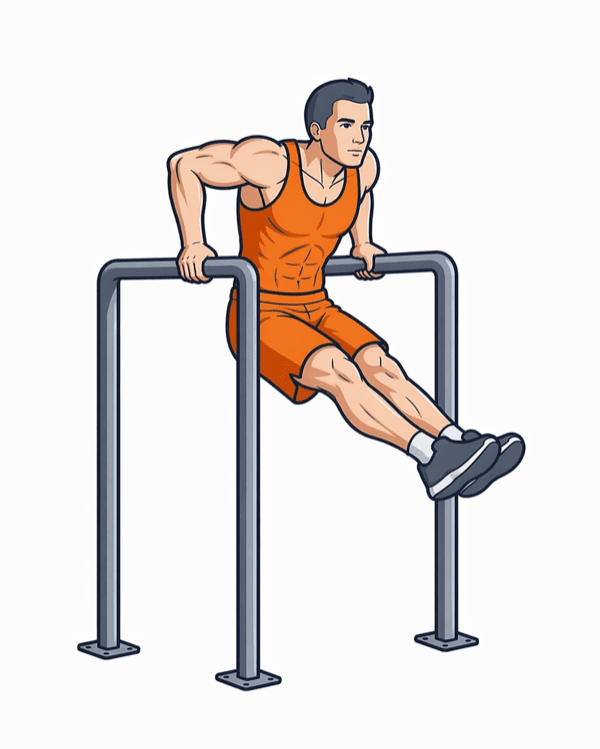
Dips are the fundamental vertical pressing exercise in calisthenics. They train triceps, chest and front delts at the same time – and they're the critical prerequisite for the muscle up.
Done cleanly, though, they're rare. This guide shows you the right technique from the static hold to the russian dip – all from the Strive Up skill tree.
Why dips are so effective
Unlike the bench press, dips train you to stabilise. You have to control your entire bodyweight in mid-air, which builds shoulder stability and core tension along the way. Muscles involved: triceps, chest, front delts.
Correct form on parallel bars
- Setup: support on the bars, arms straight, shoulders down and back – don't let them ride up to your ears.
- Body position: lean forward slightly for a chest focus, stay upright for more triceps. Legs bent or straight – whatever keeps you stable.
- Down: lower under control until your upper arms are parallel to the floor (90° at the elbow).
- Up: press out of the triceps, don't shrug the shoulders up.
- Breathing: in on the way down, out on the way up.
Your path to clean dips
Your path to clean dips
The in-app progression from a static hold to 20 clean reps on the bars.
Common mistakes
Shoulders rolling forward
If your shoulders roll forward as you descend, the load moves into the joint instead of the muscle. Keep the shoulder blades actively down – that's what you drill in the static "bench dip hold" at the start.
Too deep or too shallow
Upper arms parallel to the floor is the standard. Going deeper only makes sense if your shoulder tolerates it well – it isn't automatically better. Stopping above 90° is half a rep.
Bouncing at the bottom
Bouncing out of the bottom helps in the short term but builds no real pressing power. That's exactly what russian dips are for – they force a controlled stop.
Variations: straight bar, russian, weighted
Straight bar dips →
On a straight bar instead of parallel bars. Demands considerably more wrist mobility and core control. Essential for the muscle up – the top position is exactly the support position after the muscle-up transition. Read the full guide.
Russian dips →
At the bottom you briefly rest your forearms on the bars, then press up explosively. Trains pressing power out of the dead spot – exactly what gets you unstuck in the muscle up. Read the full guide.
Weighted dips
With added load (belt, weight vest, or a dumbbell between the knees). Only worth it once you can do 20+ clean standard dips. Top athletes do weighted dips with double their bodyweight.
Reps, sets & frequency
Dips are very demanding on the shoulders. A realistic frequency: 2 × per week, 4–5 sets of 6–12 reps. If your shoulders complain, go back to the bench variation or support holds.
Example workout
5 sets of dips to the limit (at your current skill-tree stage) · 3 sets of static support holds (5 × 10 seconds) · 3 sets of negative dips with a 5-second lower
Dips as a muscle-up prerequisite
Two dip variations are mandatory for the muscle up: straight bar dips – 10 reps for the support position and russian dips – 10 reps for explosive pressing power. Both sit directly in the skill tree as prerequisites.
Get both, add solid full-range pull-ups, and you're ready for the muscle up guide.
Train smarter with Strive Up
Track your training, use the EMOM timer, follow your PRs and discover your personal skill roadmap – for free.


Related articles
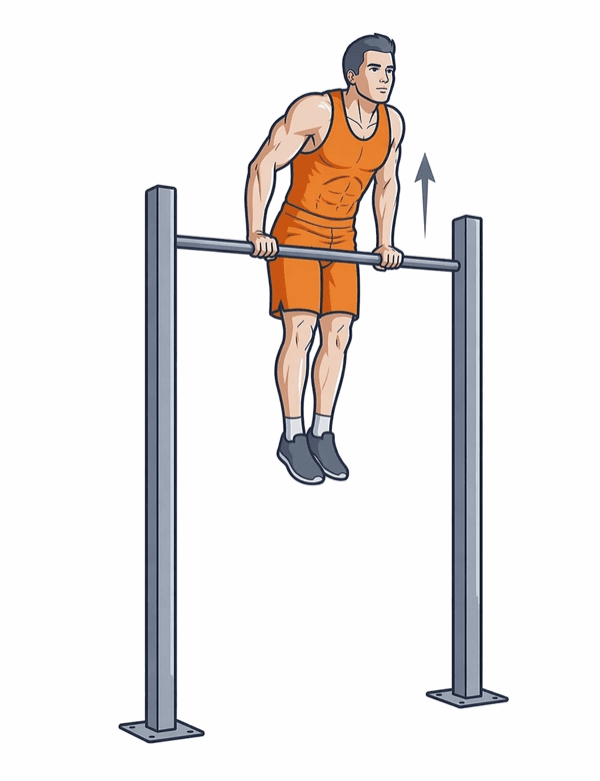
How to learn the muscle up: the complete progression guide
From the dead hang to your first clean muscle up: prerequisites, every lead-up stage, common mistakes and a clear plan that actually gets you to the king of bar skills.
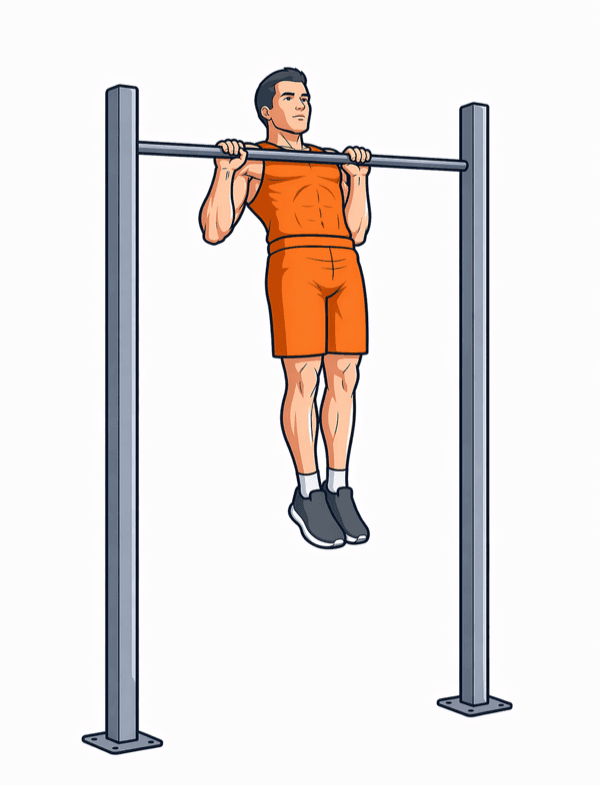
How to do pull-ups properly: technique, mistakes & progression
From the dead hang via scapula and band pull-ups to a clean full-range rep: technique, common mistakes and the complete progression ladder from the Strive Up skill tree.
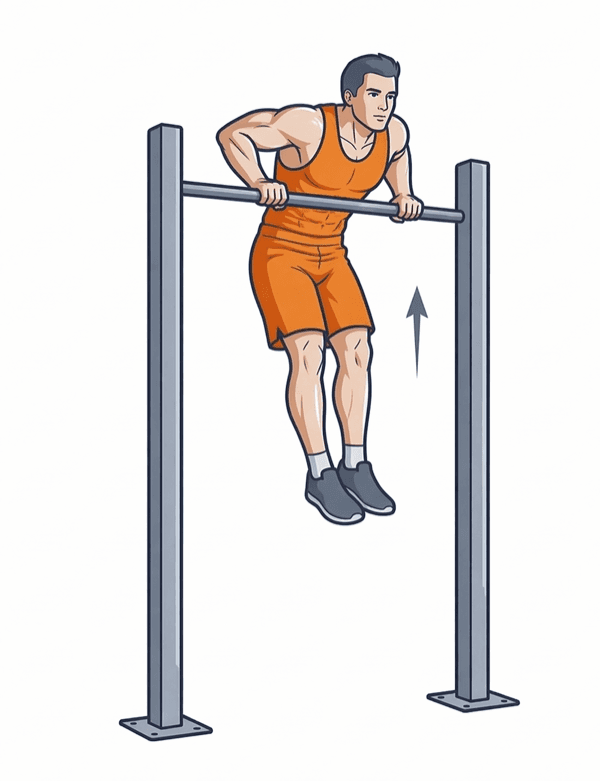
Straight bar dips: the muscle-up bridge on a straight bar
Dips on a straight bar instead of parallel bars – harder than they look and essential for the muscle up. Technique, prerequisites and progression from the Strive Up skill tree.