
How to do pull-ups properly: technique, mistakes & progression
From the dead hang via scapula and band pull-ups to a clean full-range rep: technique, common mistakes and the complete progression ladder from the Strive Up skill tree.
Contents
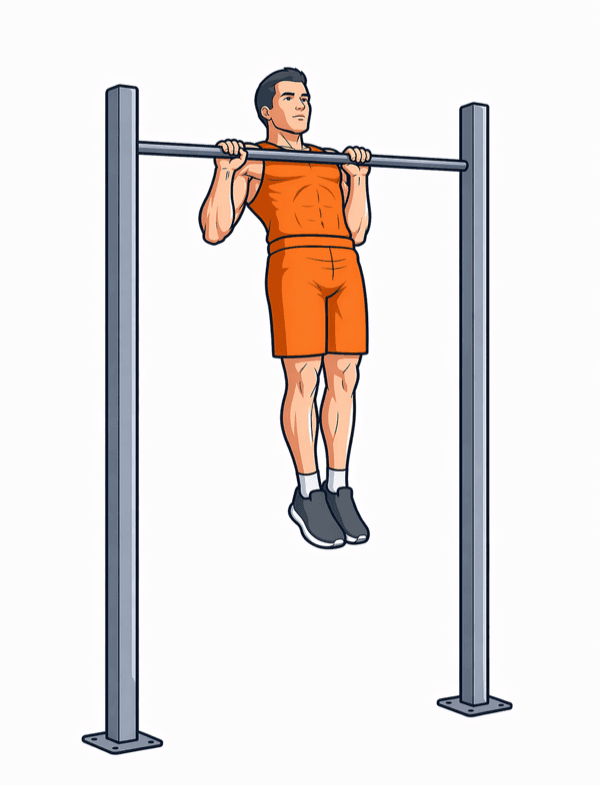
The pull-up is the fundamental vertical pulling exercise. Ten clean full-range pull-ups give you the base for almost everything that follows in calisthenics: muscle up, front lever, one-arm pull-ups.
The problem: most people call it done at five reps without the chest ever coming near the bar. This guide gives you the right technique, the most common mistakes and the exact progression from the Strive Up app.
Why the pull-up is the foundation
The classic overhand pull-up works the lats, biceps, rhomboids, rear delts and forearms. Compared to a lat pulldown machine, the pull-up additionally demands grip strength and core stability, because your entire bodyweight is hanging.
The carryover is enormous: own the full pull-up and you have the base for the pull over, muscle up, front lever and one-arm variations. Without it, no advanced skills.
Correct form
- Setup: shoulder-width overhand grip, thumb over the bar (or around it – personal preference), shoulders down and back.
- Scapular activation: before you pull, depress the shoulder blades – as if you were sliding them into your back pockets.
- The pull: drive the elbows down and slightly back. The chest goes to the bar, not just the chin over it.
- Breathing: breathe in at the hang, out during the pull.
- Lowering: take 2–3 controlled seconds back into a full hang – don't drop.
What full range means
Full extension at the bottom (elbows straight, shoulders in the hang) and chest to the bar at the top. Anything in between isn't 'full'. Half pull-ups don't count in the skill tree.
Your path to the full-range pull-up
From the dead hang to a full-range pull-up
The two tracks from the Strive Up app: the five-stage band chain and the australian pull-up track.
Common mistakes
Half reps
Pulling only to the chin and stopping halfway down builds no real pulling strength. Film yourself from the side – chest to the bar, or go back to the previous stage.
Kipping & swing
Using your legs for momentum may make sense in CrossFit, but it builds no strength in the skill tree. Strict reps count.
Inactive shoulder blades
Going straight from a passive hang into the pull overloads the shoulder joints. The scapula pull-ups in the skill tree aren't filler – they're the base.
Variations for every level
After the full-range pull-up come the more demanding variations – all from the Strive Up app:
- Solar plexus & hips: pull-ups to the upper abdomen or hips – the precursor to the muscle up.
- Archer & typewriter: one-sided pulling strength – the bridge to the one-arm pull-up.
- One arm (assisted → negative → full): one of the most demanding pulling exercises there is.
Reps, sets & frequency
Pull-ups are hard on the shoulder joints. A realistic frequency: 2–3 × per week, 4–6 sets close to failure each time, with at least 48 hours in between.
Example workout
5 sets of max pull-ups (at your current skill-tree stage) · 3 sets of scapula pull-ups with a 5-second hold · 3 sets of negative pull-ups with a 5-second lower
Next step: the muscle up
Once your full-range pull-ups are solid, the muscle up is the natural next skill. How to learn it is in the muscle up guide – including all prerequisites and lead-up stages.
Train smarter with Strive Up
Track your training, use the EMOM timer, follow your PRs and discover your personal skill roadmap – for free.


Related articles
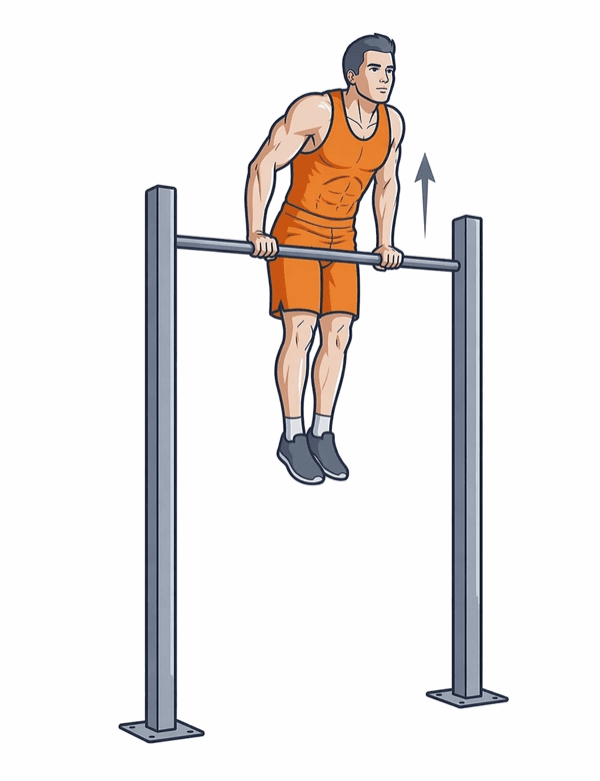
How to learn the muscle up: the complete progression guide
From the dead hang to your first clean muscle up: prerequisites, every lead-up stage, common mistakes and a clear plan that actually gets you to the king of bar skills.
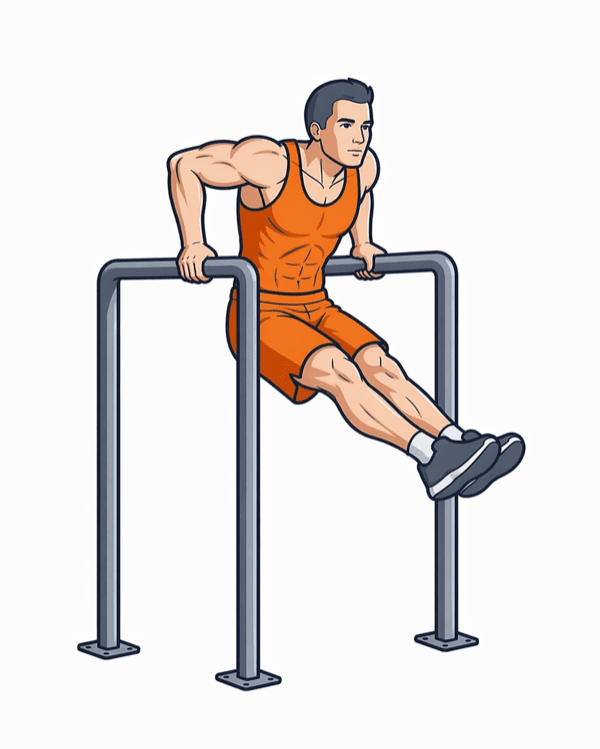
How to do dips properly: from the bench dip to muscle-up ready
The complete dip progression: bench, parallel bars, straight bar, russian. Technique, common mistakes and a training plan – straight from the Strive Up skill tree.
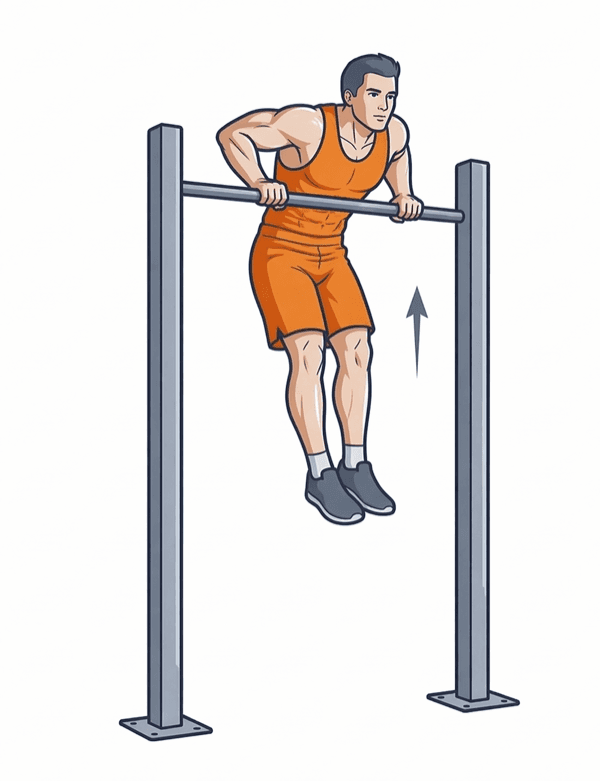
Straight bar dips: the muscle-up bridge on a straight bar
Dips on a straight bar instead of parallel bars – harder than they look and essential for the muscle up. Technique, prerequisites and progression from the Strive Up skill tree.