
How to learn the human flag: the iconic hold on a vertical pole
Sideways on a vertical pole with your body horizontal – the human flag is one of the most striking displays of strength in calisthenics. Six progression stages from the Strive Up skill tree.
Contents
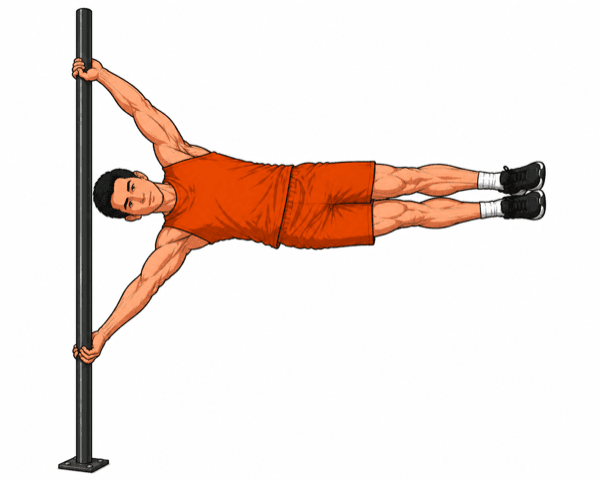
The human flag is the iconic calisthenics image: an athlete beside a vertical pole, body completely horizontal in mid-air. It looks like a flag in the wind – and demands a rarely combined mix of pulling, pushing and lateral core strength.
What the human flag demands
Unlike the front or back lever (pure hanging), the human flag loads you asymmetrically: one hand pulls, the other pushes. Anatomically that is extraordinarily demanding. Muscles worked: lats, obliques, front and rear delts, triceps.
Prerequisites
- 10+ clean pull-ups and 10+ dips – push and pull both have to be solid.
- Lateral core tension: 4 × 30s side plank per side.
- A stable vertical pole. A pole or a squat rack with clamps that will hold your full bodyweight.
Your path to the human flag
Your path to the human flag
Six stages from the Strive Up skill tree — from the clutch position to the full horizontal flag beside the pole.
The stages explained
1. Clutch flag (0:10)
Both arms hug the pole from the side – the easiest way in. You build the neuromuscular pattern without having to cope with the full push-pull disparity.
2. Tuck flag (0:10)
The classic grip position: the upper hand pulls, the lower hand pushes. Knees tight to the chest. The first real flag stage.
3. Advanced tuck flag (0:10)
Knees further away, hips at 90°. The lever gets considerably longer.
4. One-leg flag (0:10 per side)
One leg extended, the other tucked. A transitional stage that is hard for most athletes.
5. Straddle flag (0:10)
Both legs spread wide. Almost the full lever.
6. Full human flag (0:05)
Legs together and extended, body completely horizontal. A five-second hold is the Strive Up standard – holds beyond ten seconds are extremely rare.
Common mistakes
- Wrong grip mechanics: the upper hand has to "pull down", the lower hand has to "push up". If the pushing hand isn't actively pressing, you'll never get horizontal.
- Protracted shoulders: position the shoulder blades actively – upper shoulder retracted, lower shoulder stabilising.
- Hips rotating: the hips have to stay in the frontal plane. If they rotate backwards, you're basically doing half a front lever.
- No side-plank base: if your lateral core is weak, every flag collapses in a fraction of a second. Side planks are not optional.
Training plan
Day A: current flag stage 5 × max hold (per side) + side plank 4 × 45s per side
Day B: flag raises 4 × 5 (pumping from tuck into the side lever) + dragon flag negatives 3 × 5
Frequency: 2 × per week, easy to combine with a pull day.
Track it with Strive Up
In Strive Up you track the human flag per side – so you spot immediately when one side stalls while the other moves on. A balanced flag is the only safe flag.
Train smarter with Strive Up
Track your training, use the EMOM timer, follow your PRs and discover your personal skill roadmap – for free.


Related articles
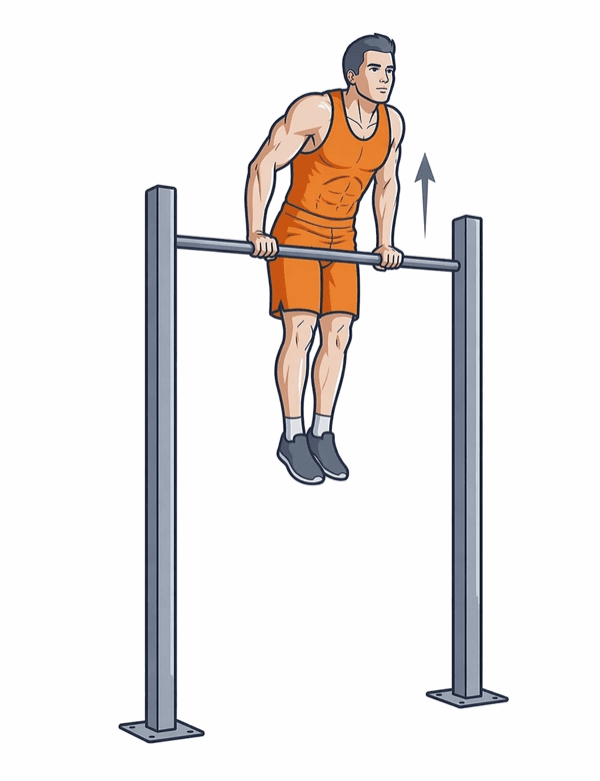
How to learn the muscle up: the complete progression guide
From the dead hang to your first clean muscle up: prerequisites, every lead-up stage, common mistakes and a clear plan that actually gets you to the king of bar skills.
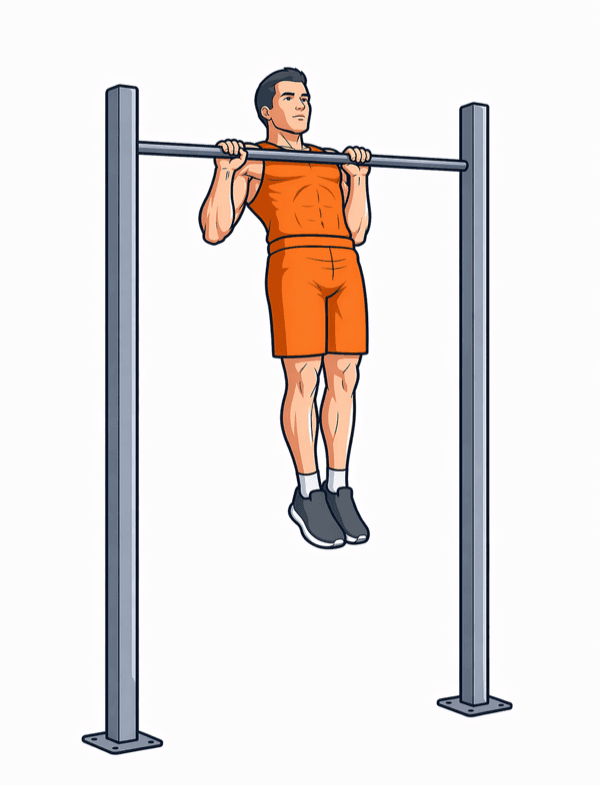
How to do pull-ups properly: technique, mistakes & progression
From the dead hang via scapula and band pull-ups to a clean full-range rep: technique, common mistakes and the complete progression ladder from the Strive Up skill tree.
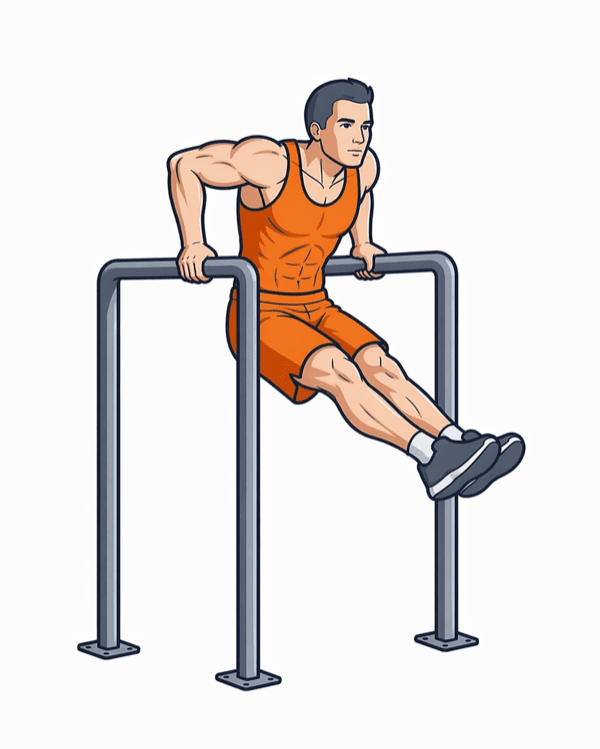
How to do dips properly: from the bench dip to muscle-up ready
The complete dip progression: bench, parallel bars, straight bar, russian. Technique, common mistakes and a training plan – straight from the Strive Up skill tree.