
Shoulder mobility: the routine for the handstand, muscle up & co.
No overhead skills without mobile shoulders. Diagnosis, dislocate progression, skin the cat and german hang – the complete shoulder routine from the Strive Up skill tree.
Contents
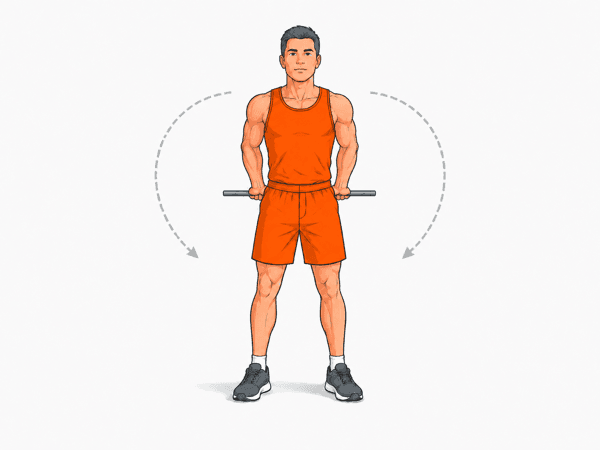
If your shoulders tip backwards in the handstand, or your sternum gets stuck on the bar in the muscle up, then in 90 % of cases you have a shoulder mobility problem, not a strength problem.
This routine fixes it systematically – with the exact exercises from the Strive Up app: dislocates for active range of motion and skin the cat for mobility under load.
Why shoulder mobility is decisive
Almost every advanced calisthenics movement requires the shoulder to reach full extension overhead – without the lumbar spine compensating for what the shoulder can't do.
- Handstand: no overhead mobility = banana position
- Muscle up: no shoulder extension = your sternum gets stuck on the bar
- Back lever, front lever: no active shoulder control in extension = impossible to hold
Quick diagnosis: 2 self-tests
Test 1: wall overhead
Stand with your back to a wall, heels 5 cm away, glutes and head touching the wall. Raise your straight arms overhead. Do your thumbs reach the wall without your glutes coming off it? If not: a clear mobility deficit.
Test 2: dislocate with a stick
Grab a broomstick wide (at least 180 cm apart). Lift it in front of you and take it in one circular motion over your head and down behind your back. Only possible by bending, or not at all? You need this routine.
Your path to mobile shoulders
Your path to mobile shoulders
Two paths from the Strive Up skill tree: dislocates for active range of motion and skin the cat for mobility under load.
The most important drills
1. Shoulder dislocates (stick, wide grip)
Wide grip on a stick (PVC pipe, broom handle, resistance band). Hold the stick in front of you and take it, arms straight, over your head and behind your back. Ten slow reps – this is your entry point into active shoulder mobility.
2. Shoulder dislocates (stick, medium grip)
Same movement, narrower grip. Harder – it demands more mobility. Only once ten reps with the wide grip are clean.
3. Shoulder dislocates (stick, narrow grip)
The narrowest grip. This is top-level mobility – get here and overhead movements stop being a problem.
4. Skin the cat
Hanging from a bar, rotate backwards through your arms until you hang in the deepest position behind your back. Mobility under bodyweight – qualitatively different from the stick. Build up with tucked knees and one foot for support, then go free with straight legs.
5. German hang
After the skin the cat, hang in the deepest position – shoulders fully extended, chest towards the bar. Holding for 30 seconds stretches shoulders and chest under load. Brutally effective – and brutally hard.
The 8-minute routine
The full routine
1. 2 minutes of shoulder dislocates (3 sets of 10 reps at your current grip width) 2. 1 minute of wrist mobility (rotations, extensions) 3. 3 minutes of skin the cat (3 sets of 5 reps at your current skill-tree stage) 4. 2 minutes of german hang (4 × 30-second holds)
When and how often to train
Mobility work is not intense enough to justify rest days. Ideally daily, or at least five times a week. The short routine (8 minutes) is built exactly for that.
You'll notice the first effects after two to three weeks – significant change after six to twelve weeks of consistent practice. Mobility is a marathon, not a sprint.
Train smarter with Strive Up
Track your training, use the EMOM timer, follow your PRs and discover your personal skill roadmap – for free.


Related articles
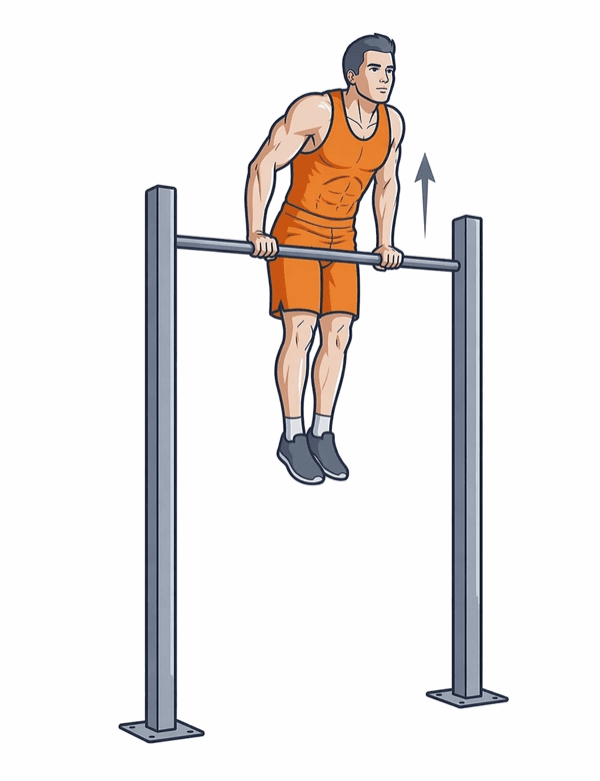
How to learn the muscle up: the complete progression guide
From the dead hang to your first clean muscle up: prerequisites, every lead-up stage, common mistakes and a clear plan that actually gets you to the king of bar skills.
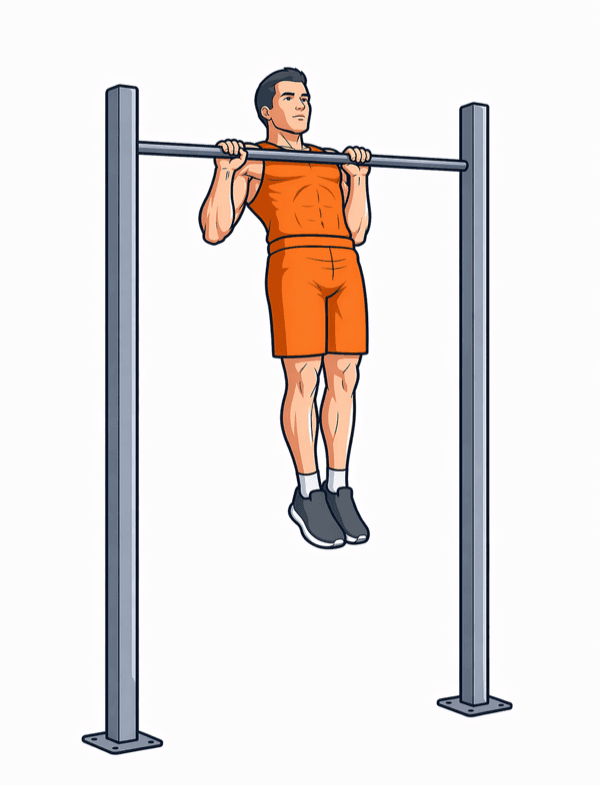
How to do pull-ups properly: technique, mistakes & progression
From the dead hang via scapula and band pull-ups to a clean full-range rep: technique, common mistakes and the complete progression ladder from the Strive Up skill tree.
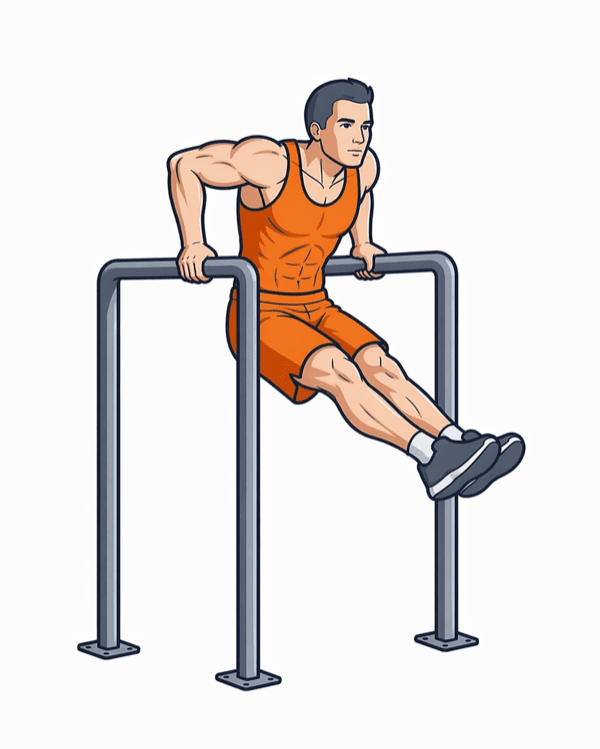
How to do dips properly: from the bench dip to muscle-up ready
The complete dip progression: bench, parallel bars, straight bar, russian. Technique, common mistakes and a training plan – straight from the Strive Up skill tree.