
Hanging leg raises: from the knee tuck to toes up
The complete hanging progression from the Strive Up skill tree — six stages from single-leg raises to full toes up, where your toes touch the bar.
Contents
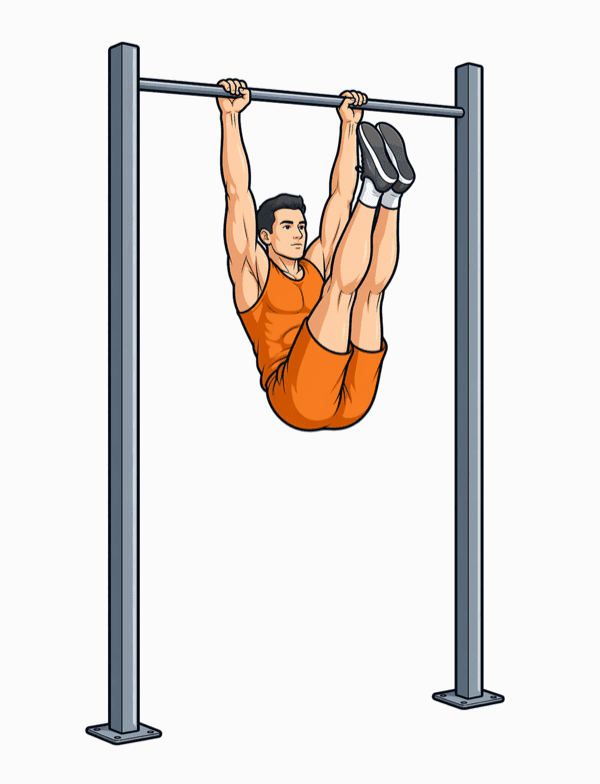
Hanging leg raises are often written off as an "ab exercise" – but in calisthenics they are one of the hardest core progressions there is. Own the full hanging progression up to toes up and you don't just have a six-pack – you have the core stability for the pull over, muscle up and front lever.
Why hanging leg raises are so valuable
- Full hip flexor strength: raising straight legs to the bar loads the hip flexors maximally – isolated, with no ground contact.
- Lower abs: unlike sit-ups, the hips move towards the chest – which is exactly what activates the lower abs.
- Grip strength as a by-product: six clean toes-up reps mean 30+ seconds of active hanging with the core under load – brutally effective.
- A bridge to the pull over: the mechanics (taking your legs over your head) are exactly the base movement of the pull over.
Prerequisites
Before you start the first stage of the progression you need a solid base:
- Dead hang 1:00: one minute of passive hanging – grip strength and shoulder stability.
Why not go straight to toes up?
Toes up demands not only core strength but hamstring mobility and compression strength. Jump straight in and you'll swing – and learn nothing. The stages are not optional.
Your path to toes up
Your path to toes up
The complete hanging progression from the Strive Up skill tree — six stages from the dead hang to touching the bar with your toes.
The six stages explained
1. Single-leg raises (hanging) – 10 per side
Hanging from the bar, raise one straight leg while the other stays relaxed. Reduced load – the ideal entry point that teaches the movement without overwhelming the hip flexors.
2. Both-leg raises (hanging) – 10 reps
Raise both straight legs at least to parallel with the floor. This is where it gets serious: the hip flexors carry the full weight of your legs while the core fights the swing.
3. Tucked leg raises (hanging) – 10 reps
Pull your tucked knees up to your chest. Compression enters the picture – you're not just lifting, you're actively pressing the legs into the chest. Preparation for the L-sit.
4. L-sit leg raises (hanging) – 10 reps
Raise straight legs into the L position (90°) and hold briefly. You'll feel the much higher core demand compared to the tucked version immediately.
5. V-sit leg raises (hanging) – 10 reps
Raise your legs above horizontal – towards the bar. Requires compression AND hip flexor strength beyond the range of any typical ab exercise.
6. Toes up – 10 reps
Toes touch the bar. Full range of motion in the hang – the highest stage of the leg raise. Ten clean reps here is CrossFit toes-to-bar level.
Common mistakes
Swing instead of strength
Kipping may be allowed in competition – for building the skill it's poison. Clean reps means controlled lifting and lowering, no free fall.
Legs not straight
Doing the L-sit stage with bent knees builds no compression. If hamstring mobility is the limit, finish the tucked stage cleanly first.
Passive shoulders
Even in the hang the shoulders should be active (scapulae slightly depressed). Otherwise the load moves into the joints – and leg raises feel harder than they need to.
Reps, sets & frequency
You can train leg raises more often than, say, pull-ups – the load is lower. Realistically: 3 × per week, 3–4 sets close to the limit, ideally at the end of a pull session.
Example workout
After pull-ups: 4 sets of leg raises at your current skill-tree stage · 3 sets of hollow body holds (30 s) · 3 sets of windshield wipers for lateral core stability
Why toes up leads you to the muscle up
In the Strive Up skill tree, toes up is a direct prerequisite for the pull over – which in turn is the lead-up to the muscle up. Working cleanly through the hanging progression doesn't just build a six-pack, it builds the hips-to-bar mechanics that are worth their weight in gold in the muscle-up transition.
Train smarter with Strive Up
Track your training, use the EMOM timer, follow your PRs and discover your personal skill roadmap – for free.


Related articles
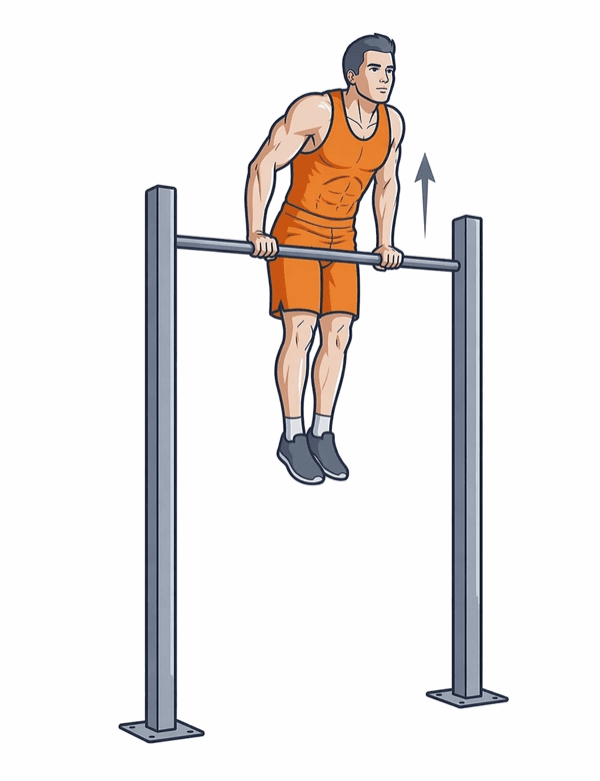
How to learn the muscle up: the complete progression guide
From the dead hang to your first clean muscle up: prerequisites, every lead-up stage, common mistakes and a clear plan that actually gets you to the king of bar skills.
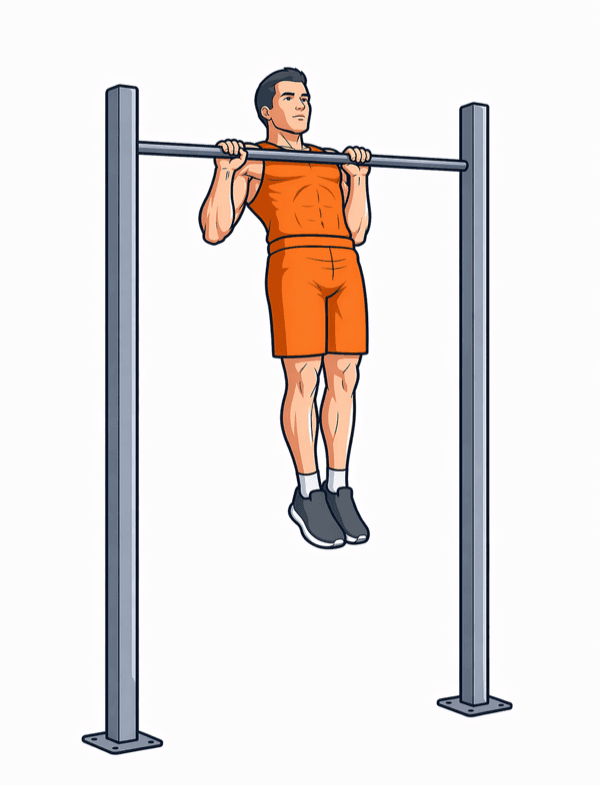
How to do pull-ups properly: technique, mistakes & progression
From the dead hang via scapula and band pull-ups to a clean full-range rep: technique, common mistakes and the complete progression ladder from the Strive Up skill tree.
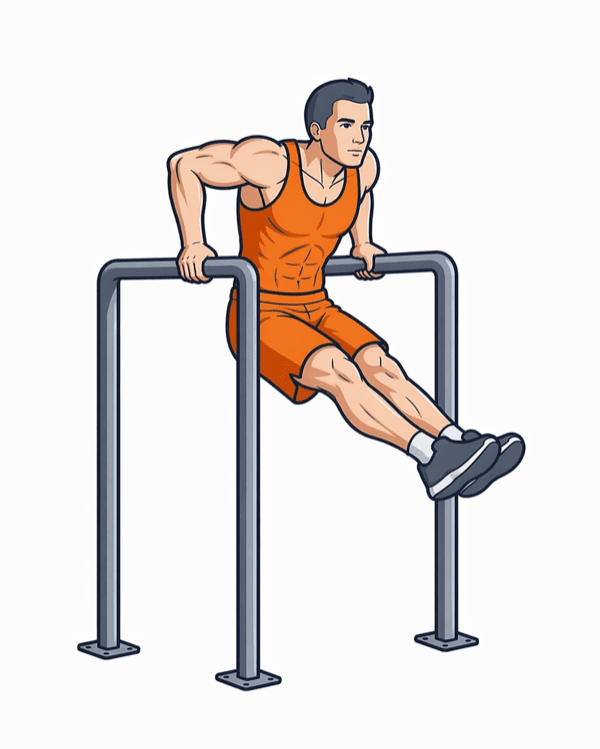
How to do dips properly: from the bench dip to muscle-up ready
The complete dip progression: bench, parallel bars, straight bar, russian. Technique, common mistakes and a training plan – straight from the Strive Up skill tree.