
How to learn the pull over: the underrated gateway to the muscle up
The pull over is the most direct bridge to the muscle up – and the most overlooked skill of them all. Here's how to build it, from prerequisites via technique to five clean reps.
Contents
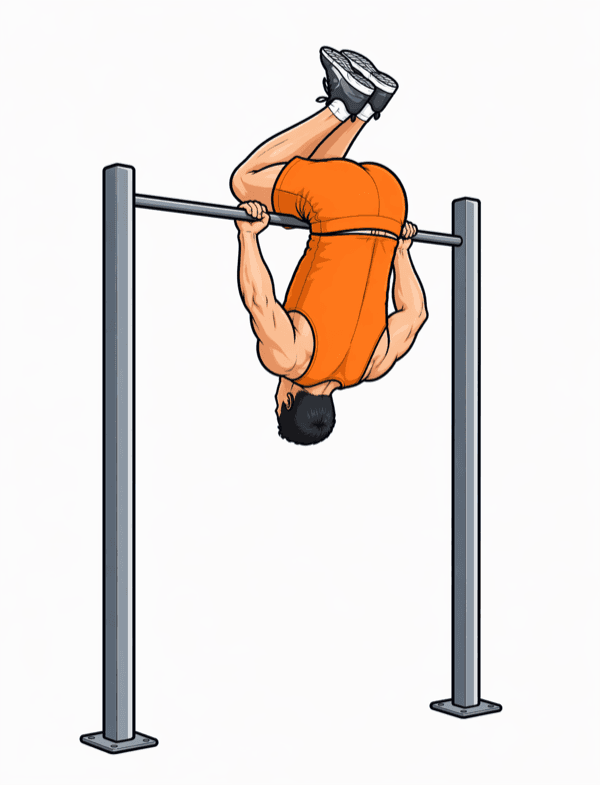
In calisthenics the pull over is often the missing puzzle piece on the way to the muscle up. Master it and you've internalised the mechanics of the muscle-up transition in slow motion – which makes the explosive version far more systematic to approach.
What is a pull over?
You start hanging from the bar, lift both legs over your head and rotate backwards over the bar into the support position. Muscles involved: lats, biceps, triceps, core and front delts.
It is essentially a muscle up without the explicit pull-up – your legs carry you over the bar through momentum.
Why the pull over is so valuable
- It teaches the transition: you practise exactly the hang → support transition where most muscle-up attempts fail.
- It builds the core: lifting your legs to the bar combined with pulling is a brutal core load.
- It scales: from the negative (lowering under control from the top) to the dynamic version – there's a level for everyone.
Your path to the pull over
Your path to the pull over
Four prerequisites from the Strive Up skill tree — all direct prereqs you should own first.
The movement in 4 phases
- Hang & setup: shoulder-width overhand grip, active scapulae, core tight.
- Legs up: swing your legs up quickly but under control, hips towards the bar.
- Rotation: as the legs go over the bar you pull with the arms and tip your chest over the bar.
- Support: straighten the arms, lower the legs, hold the support position.
Prerequisites from the skill tree
Pull-ups 10 reps, australian pull-up (parallel) 10 reps, straight bar dips 10 reps, hanging leg raises (toes up) 10 reps. Only then is a first pull-over attempt worth it.
Common mistakes
Trying too early
Without pull-ups and toes-up leg raises there is no pull over. The prerequisites are not optional – they supply the pulling and hip flexor strength.
Legs over the bar, body underneath
You have to get your body over the bar, not just your legs. The chest tips with them and the hips rotate.
Pure momentum
Throwing yourself over with swing alone teaches you nothing for the muscle up. The goal is controlled movement – if necessary, start with negatives (lowering from the top).
How to train it
The pull over is taxing – more than five sets per session rarely makes sense. Recommendation: 1–2 × per week as a skill focus, combined with pull-ups and dips.
Build-up workout
5 sets of pull overs (negatives if the full rep isn't there yet — 5 seconds lowering under control) · 3 sets of hanging leg raises (toes up, 10 reps) · 3 sets of pull-ups (to the solar plexus or hips — they give you the height for the rotation)
The pull over as a muscle-up bridge
In the Strive Up skill tree the pull over is a direct prerequisite for the muscle up – not because you'd ever do a pull over in competition, but because it teaches you the transition. Five clean pull overs mean you understand the mechanics for the next jump.
Once that's solid, carry on with the muscle up guide.
Train smarter with Strive Up
Track your training, use the EMOM timer, follow your PRs and discover your personal skill roadmap – for free.


Related articles
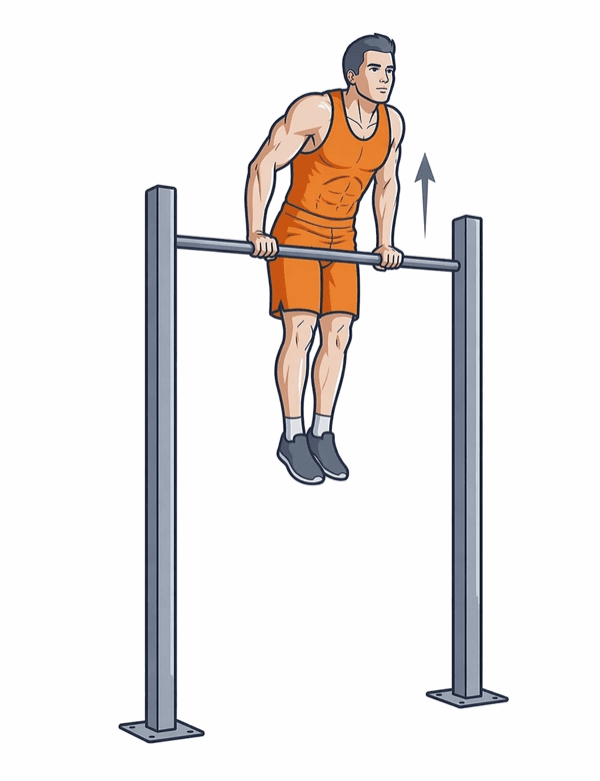
How to learn the muscle up: the complete progression guide
From the dead hang to your first clean muscle up: prerequisites, every lead-up stage, common mistakes and a clear plan that actually gets you to the king of bar skills.
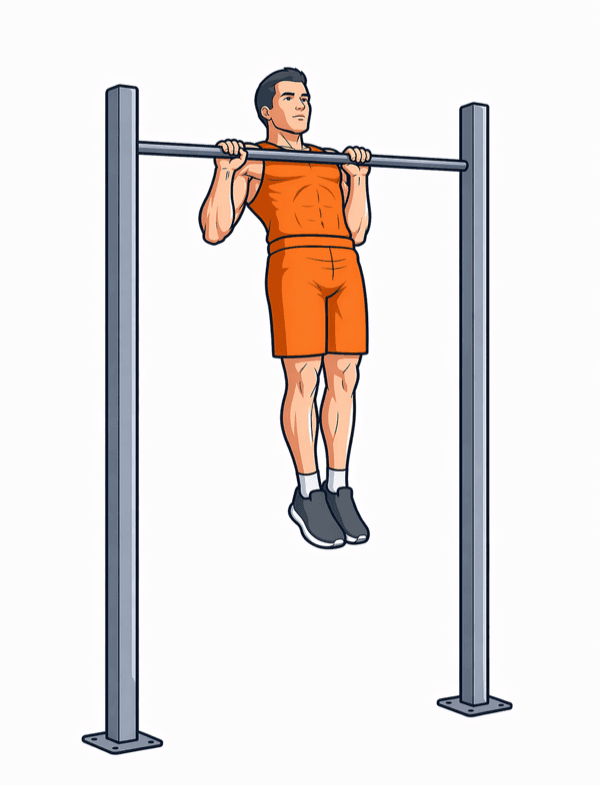
How to do pull-ups properly: technique, mistakes & progression
From the dead hang via scapula and band pull-ups to a clean full-range rep: technique, common mistakes and the complete progression ladder from the Strive Up skill tree.
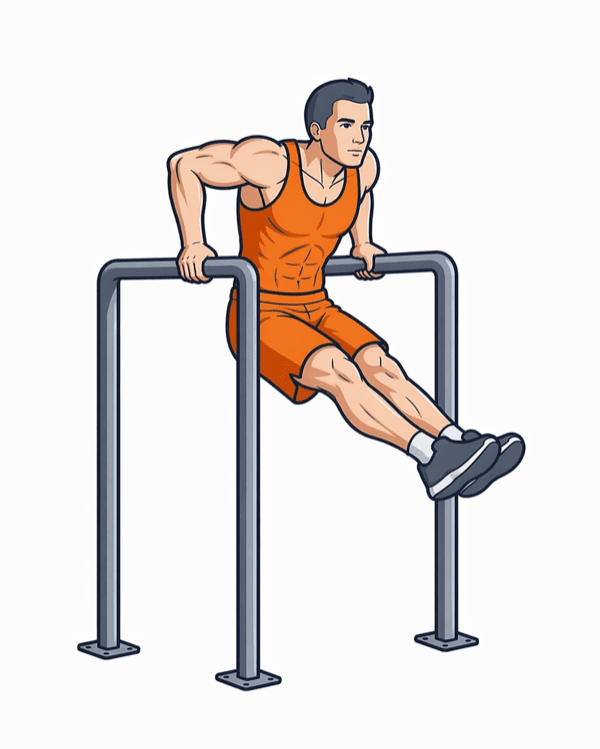
How to do dips properly: from the bench dip to muscle-up ready
The complete dip progression: bench, parallel bars, straight bar, russian. Technique, common mistakes and a training plan – straight from the Strive Up skill tree.