
How to learn the handstand push-up: vertical pressing without weights
The HSPU is the bodyweight equivalent of the overhead press – except you press your entire bodyweight. Three paths from the Strive Up skill tree: wall, parallettes, freestanding.
Contents
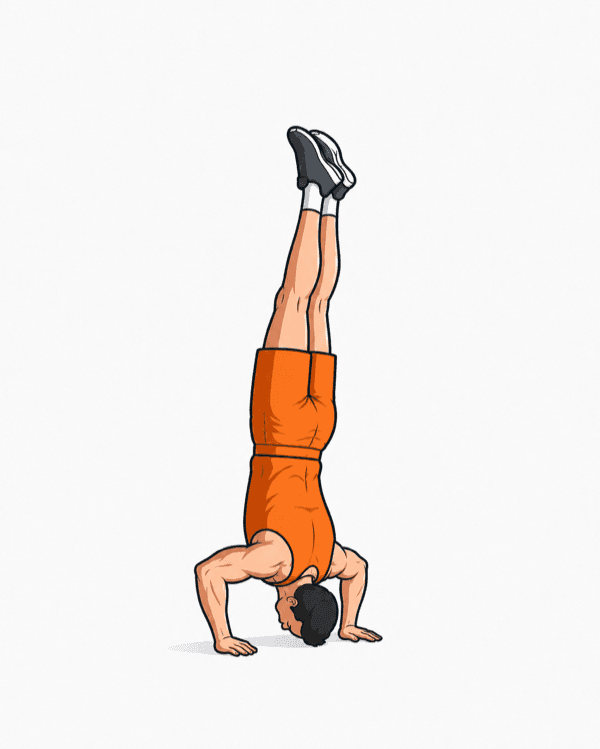
The handstand push-up (HSPU) is the most demanding vertical pressing movement in bodyweight training: your entire bodyweight, upside down, eyes on the floor. It isn't only about strength – it's balance, control and trusting the position.
What makes the HSPU special
Muscles worked: front delts, triceps, trapezius, core. Unlike a barbell overhead press you also have to balance the load – only a little in the wall HSPU, completely in the free HSPU. That makes every HSPU a combination of pressing and handstand skill.
Prerequisites
- A clean wall handstand (held for at least 30 seconds).
- Pike push-ups: 12+ clean reps with the feet elevated.
- Healthy wrists and shoulder mobility – otherwise the HSPU quickly becomes an injury risk.
Your path to the HSPU
Your path to the freestanding handstand push-up
Three paths from the Strive Up skill tree: against the wall, on parallettes, or freestanding. Three routes, one goal.
The stages explained
Path 1: wall handstand → wall HSPU
The most direct variation. From the wall handstand, lower under control until your forehead almost touches the floor, then press back up. Wall contact reduces the balance demand.
Path 2: parallettes handstand → parallettes HSPU
On parallettes or handles. You gain more range of motion (the head can drop below hand level) and take load off the wrists. Popular with athletes who have wrist issues.
Path 3: free handstand → free HSPU
The hardest path. You need a 30-second free handstand before you can even start pressing. Volume of wall HSPUs combined with free handstand practice is the usual route.
Common mistakes
- The banana (arched back): hips towards the wall, ribs tucked. If your wall HSPU shows a banana shape, you have the same problem in the free handstand.
- Half reps: your forehead has to touch the floor (or a defined marker such as a folded yoga mat). Quarter HSPUs don't count.
- Sinking shoulders: the shoulders have to stay actively elevated ("push the floor away"). Hanging in your shoulders wrecks your traps.
- Skipping ahead to free HSPUs: no 30-second free handstand, no free HSPUs. Full stop. Patience pays off.
Training plan
Day A (push focus): wall HSPU 5 × max + pike push-ups 3 × 12 + handstand holds 5 × 30s
Day B (balance + strength): free handstand practice 15 min + negative HSPUs 4 × 3
Frequency: 2–3 × per week with at least 48 hours in between.
Track it with Strive Up
Strive Up shows you at a glance whether your HSPU progression needs more balance or more pressing strength. That's the critical question – most athletes underestimate the skill component and overestimate the strength component.
Train smarter with Strive Up
Track your training, use the EMOM timer, follow your PRs and discover your personal skill roadmap – for free.


Related articles
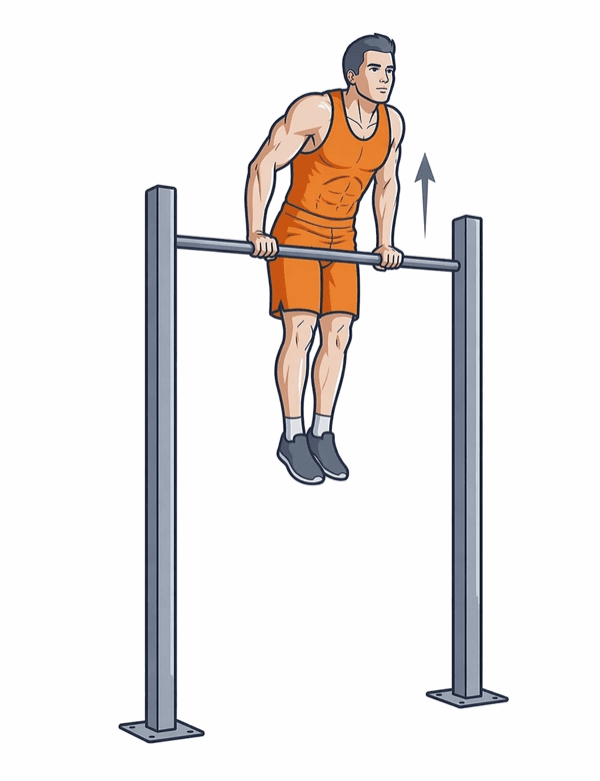
How to learn the muscle up: the complete progression guide
From the dead hang to your first clean muscle up: prerequisites, every lead-up stage, common mistakes and a clear plan that actually gets you to the king of bar skills.
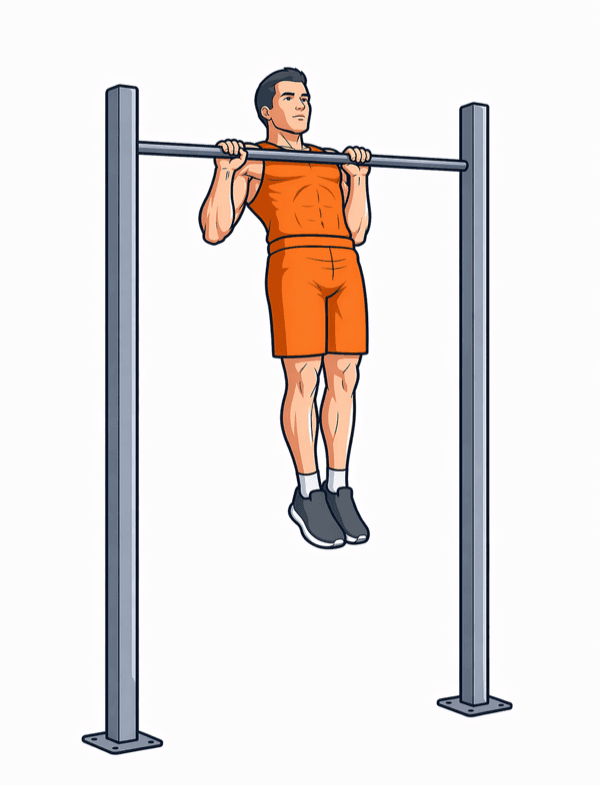
How to do pull-ups properly: technique, mistakes & progression
From the dead hang via scapula and band pull-ups to a clean full-range rep: technique, common mistakes and the complete progression ladder from the Strive Up skill tree.
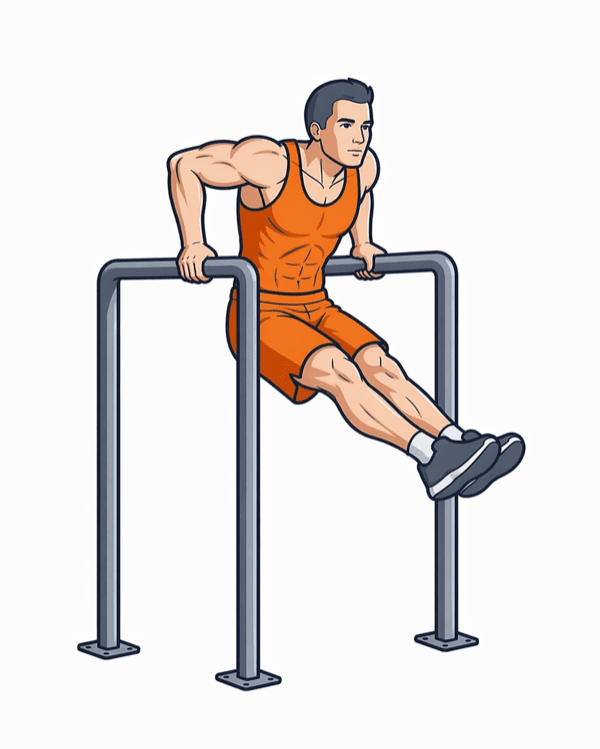
How to do dips properly: from the bench dip to muscle-up ready
The complete dip progression: bench, parallel bars, straight bar, russian. Technique, common mistakes and a training plan – straight from the Strive Up skill tree.