
How to learn the planche: from the lean to a full static hold
The planche is one of the hardest bodyweight skills. Six progression stages, prerequisites, common mistakes and a clear plan – from the Strive Up skill tree.
Contents
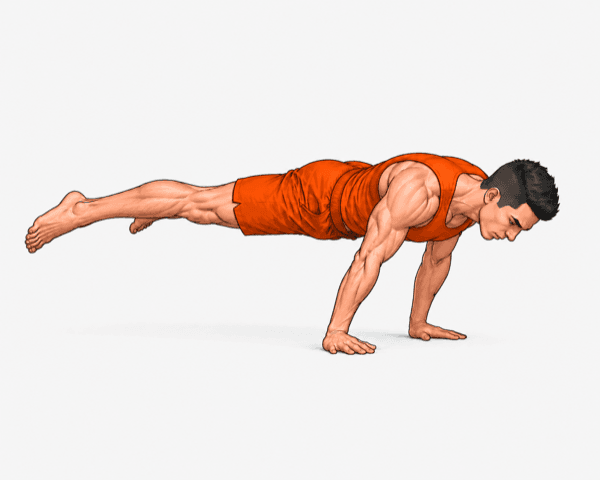
The planche is the supreme discipline of bodyweight pressing: your body parallel to the floor, carried by your hands alone. Pure shoulder and pressing strength combined with absolute core tension.
Realistically, working towards a full planche hold takes one to three years. But every stage gives you noticeably more pressing power – not just at the finish line.
What makes the planche so hard
The planche isn't simply a "hard push-up". In the full hold your centre of mass sits well in front of your hands – every centimetre of lever multiplies the torque on shoulders and wrists. Muscles worked: front delts, chest, triceps, core, forearms.
Prerequisites
- 20+ clean push-ups with a hollow body.
- Solid wrist mobility (flexion and extension).
- Active shoulder control – no sinking into the shoulders.
Your path to the planche
Your path to the full planche
Six stages from the Strive Up skill tree — from the lean and pseudo push-ups via the three tuck variations to the straddle and finally the full planche.
The stages explained
1. Planche lean (0:30)
From a plank position, tip your shoulders far forward past your hands. You'll feel it immediately in the front delts. The foundation for every other planche element.
2. Pseudo push-ups (15 reps)
Push-ups where your shoulders travel far past your hands on every rep. You train the lean position in motion – essential for the transition to the tuck.
3. Tuck planche (0:20)
Knees tight to the chest, shoulders tipped far forward, feet off the floor. The first real planche stage. Hold for 20 seconds.
4. Advanced tuck planche (0:15)
Back parallel to the floor, knees still tucked but with an open hip angle. The lever gets longer – considerably harder.
5. Straddle planche (0:10)
Legs straight and spread wide. Close to the full planche lever, but a little easier thanks to the open legs.
6. Full planche (0:10)
Legs together, fully extended, parallel to the floor. Maximum lever – the final form.
Common mistakes
- Skipping stages: tuck straight to straddle is wasted effort. Every stage builds specific tension and strength patterns.
- Piked hips: the hips have to be actively lifted. If they sag, the form isn't clean – even if your feet are off the floor.
- Too much volume: you can't take maximum-intensity static holds every day. Two to three times a week is the ceiling.
- Neglecting the wrists: five minutes of wrist prep before every session. Otherwise tendon problems will end your progress.
Training plan
Day A: planche lean 4 × 20s + pseudo push-ups 4 × 8
Day B: current tuck stage 5 × max hold (until form breaks) + plank tucks 3 × 10
Frequency: 2 × per week, at least 48 hours apart. Static holds need recovery.
Track it with Strive Up
In Strive Up you track every planche stage with its hold time. If the seconds climb slowly but steadily, you're on plan. If they plateau for four weeks, that's your signal to deload or change stage.
Train smarter with Strive Up
Track your training, use the EMOM timer, follow your PRs and discover your personal skill roadmap – for free.


Related articles
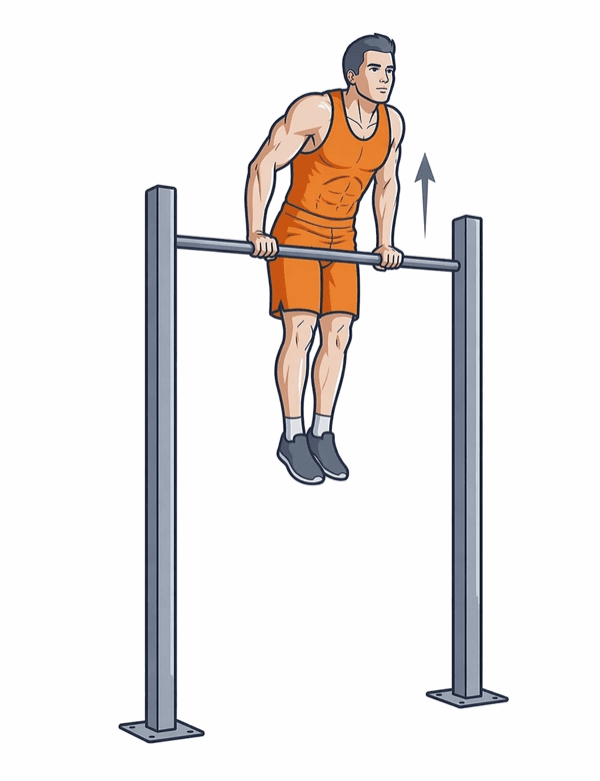
How to learn the muscle up: the complete progression guide
From the dead hang to your first clean muscle up: prerequisites, every lead-up stage, common mistakes and a clear plan that actually gets you to the king of bar skills.
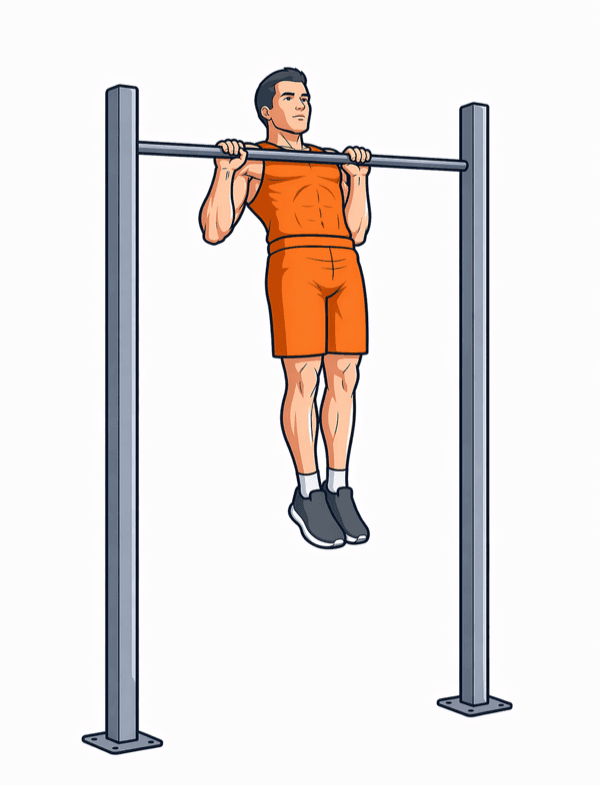
How to do pull-ups properly: technique, mistakes & progression
From the dead hang via scapula and band pull-ups to a clean full-range rep: technique, common mistakes and the complete progression ladder from the Strive Up skill tree.
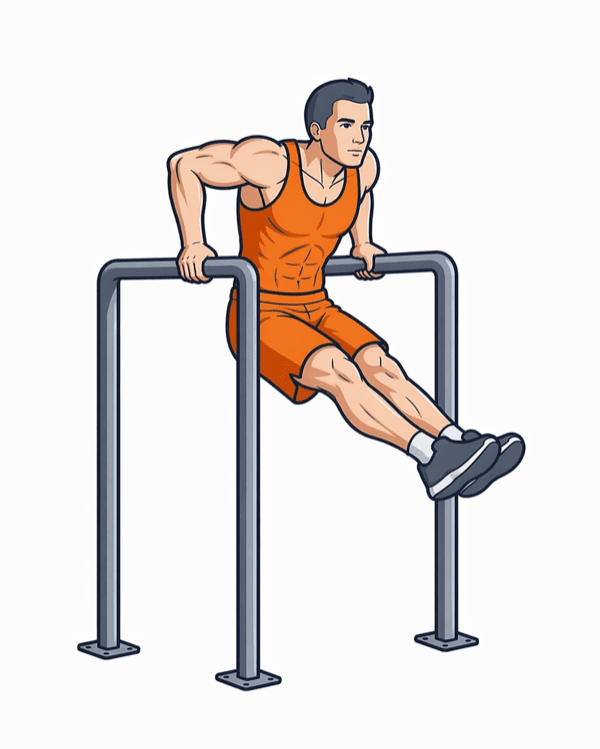
How to do dips properly: from the bench dip to muscle-up ready
The complete dip progression: bench, parallel bars, straight bar, russian. Technique, common mistakes and a training plan – straight from the Strive Up skill tree.