
The push-up: perfect technique and variations for every level
From the plank via knee push-ups to pike push-ups: correct form, common mistakes and the variations that take you from beginner to vertical pressing.
Contents
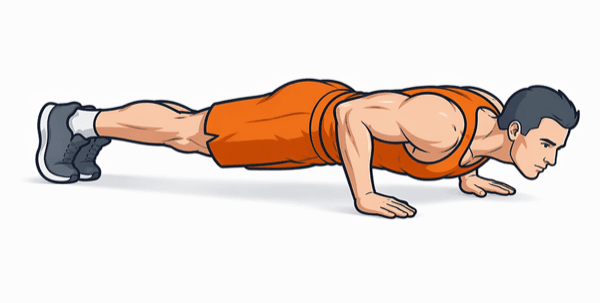
The push-up is the fundamental horizontal pressing exercise. It works the chest, triceps, front delts and core – effectively a full-body workout in a single movement.
Once you can do 20 clean push-ups you have the base for pike push-ups, the frogstand and ultimately the free handstand.
Why the push-up is the foundation
Unlike the bench press, the push-up trains not only pressing strength but full-body tension. You hold a plank position while you press – core, glutes, legs, everything works. That is exactly the tension you'll need later for the frogstand and handstand.
Correct form
- Setup: hands shoulder width (or slightly wider) under the shoulders, fingers pointing forwards. Plank position: a straight line from head to heels, glutes squeezed, abs tight.
- Lowering: take two controlled seconds until your chest is just above the floor. Elbows slightly tucked (not flared to 90°, more like 45°).
- Pressing: drive up explosively from the chest and triceps. Keep the shoulder blades active – don't let yourself sag at the bottom.
- Breathing: breathe in on the way down, out on the way up.
What counts as a clean rep
Chest almost touches the floor, hips don't sag, glutes don't shoot up, elbows lock out fully at the top. Anything else is half-baked and doesn't count in the skill tree.
Your path to clean push-ups
From the plank to a clean push-up
The simple Strive Up progression — core tension as the base, then push-ups with reduced load, then the full version.
Common mistakes
Sagging hips
If your lower back drops towards the floor during the push-up, core tension is missing. The fix: go back to the one-minute plank, which is a prerequisite in the skill tree.
Elbows flared to 90°
The classic mistake from school PE. It loads the shoulders heavily. Keeping the elbows closer to the body (45°) is easier on the joints and trains the triceps at the same time.
Half reps
Going down 20 cm and back up builds no real chest strength. Chest just above the floor – or back to the knee variation with full range.
Variations from beginner to advanced
Push-ups (on knees) – 25 reps
Reduced load on the knees. Allows clean, full range while you build up. Not a "lesser" version – a build-up stage anyone can work through.
Push-ups – 20 reps
The classic with feet on the floor. Full bodyweight. 20 reps is the in-app goal.
Pike push-ups – 15 reps
V position: hips high in the air, hands in front of your head. Shifts the load onto the shoulders. The precursor to vertical pressing.
Pike push-ups (feet elevated) – 12 reps
Pike with the feet raised (chair, box). Almost vertical pressing – the direct precursor to the handstand push-up.
Reps, sets & frequency
Push-ups are less taxing than pull-ups, so higher frequency works. 3–4 × per week as part of a push day, 4–6 sets close to failure each time.
Example workout
5 sets of push-ups (at your current skill-tree stage) · 3 sets of plank (1 minute each) · 3 sets of pike push-ups (12 reps)
Train smarter with Strive Up
Track your training, use the EMOM timer, follow your PRs and discover your personal skill roadmap – for free.


Related articles
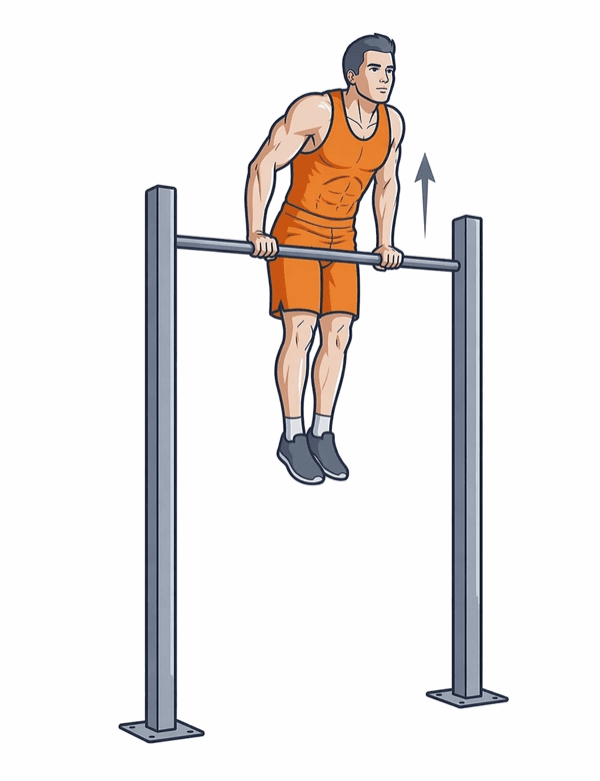
How to learn the muscle up: the complete progression guide
From the dead hang to your first clean muscle up: prerequisites, every lead-up stage, common mistakes and a clear plan that actually gets you to the king of bar skills.
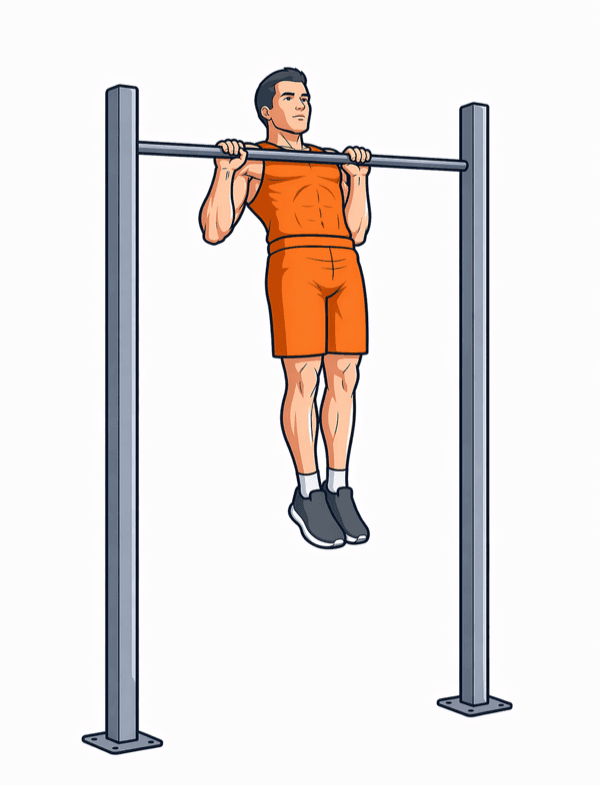
How to do pull-ups properly: technique, mistakes & progression
From the dead hang via scapula and band pull-ups to a clean full-range rep: technique, common mistakes and the complete progression ladder from the Strive Up skill tree.
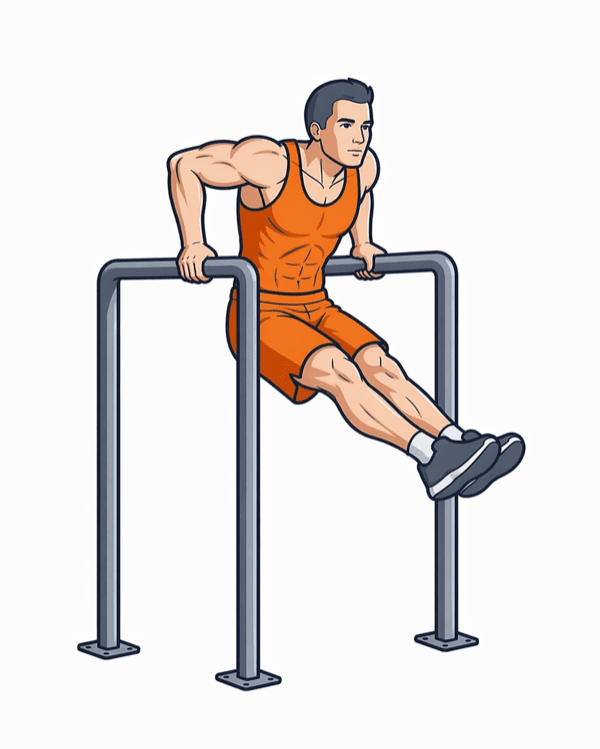
How to do dips properly: from the bench dip to muscle-up ready
The complete dip progression: bench, parallel bars, straight bar, russian. Technique, common mistakes and a training plan – straight from the Strive Up skill tree.